We’re excited to share this insight from Ingrid Melvær Paulin, our in-house behavioral scientist and Director of Research and Product Strategy, on the benefits and science behind deep rest.
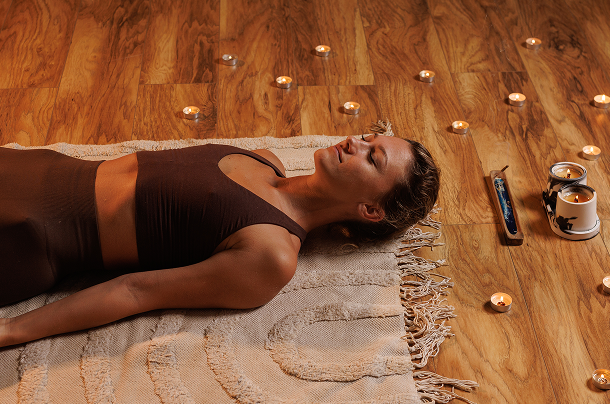
Have you ever wondered why the health benefits of practices such as yoga, meditation, prayer, and even cooking or gardening are similar? Scientists at UCSF have come closer to a solution, suggesting that these practices promote a highly beneficial state called “deep rest.”
Deep Rest is a term researchers use to describe a physiological and psychological state of restoration that’s induced by certain contemplative and embodied practices like yoga, meditation, prayer, Tai Chi, and even sensory-based activities like cooking or gardening.
While they have important differences, the practices that support deep rest share some important characteristics:
- They are Rhythmic (like breath or movement)
- They are Focused (involve mindful attention)
- They are Emotionally calming (feel safe or meaningful)
The benefits of deep rest are profound:
- The vagus nerve is activated, promoting parasympathetic dominance (aka “rest and digest” mode)
- Heart rate variability (HRV) increases, a marker of resilience and nervous system flexibility
- Cortisol and other stress hormones drop
- Inflammatory markers like IL-6 decrease
- Mitochondrial efficiency and energy balance improve
- Genes linked to cellular repair and telomere maintenance are upregulated
Since frequency of practice matters, the key is finding and building a practice that resonates with you. Whether it’s yoga, meditation, or something else, the goal is to regularly achieve that state of deep rest where true healing begins. Consistency is key, whether you can fit in a longer session or even just taking a few moments to yourself on a regular basis.
As we continue to explore the science behind these practices, one thing is clear: Engaging in wellness practices is more than just a moment of peace. It engages our restorative biology and provides a true pathway to better health and well-being.
Take this as your reminder to slow down. Make time each day to find your deep rest.
Explore Glo’s restorative flows, yin classes, meditations, guided walks and more.
Written by: Ingrid Melvær Paulin, Director of Research & Product Strategy at Glo
Reference:
Crosswell, A. D., Mayer, S. E., Whitehurst, L. N., Picard, M., Zebarjadian, S., & Epel, E. S. (2024). Deep rest: An integrative model of how contemplative practices combat stress and enhance the body’s restorative capacity. Psychological Review, 131(1), 247–270.
