We are excited to feature this expert insight from master teacher and Glo content advisor Dr. Sara Elizabeth Ivanhoe. With a background that spans 30 years of teaching and a Ph.D. focused on sleep philosophy, Sara serves as a trusted guide for the Glo community.
Spring Forward isn’t as simple as losing an hour of sleep. What appears to be a simple clock adjustment can briefly unsettle multiple physiological systems.
On Sunday, March 8, 2026 at 2:00 a.m. local time, clocks move forward to 3:00 a.m. This yearly time change, known commonly as “Spring Forward,” quietly shortens the night by one hour. It sounds insignificant, yet this small, annual shift interacts directly with the body’s circadian rhythm — the internal timing system regulating sleep, hormone activity, alertness, metabolism, cardiovascular function, and mood. In the days following the time change, researchers have repeatedly observed elevations in both health and safety patterns. Many people experience temporary disruptions in sleep quality, concentration, and mood. While individual responses vary, the broader pattern is consistent: the body registers the shift.
This response reflects how tightly physiology is linked to timing. The circadian rhythm depends on stable cues — especially light exposure and regular sleep-wake cycles — to coordinate internal processes. When clocks suddenly advance, sleep is often shortened, morning light exposure is reduced, and the brain must recalibrate its internal timing against unchanged daily demands. The result resembles a mild form of jet lag: not dramatic, but enough to influence alertness, stress regulation, and overall equilibrium.
One of the more surprising effects of losing an hour of sleep is that it does not always produce simple fatigue. Instead, many people feel slightly overstimulated, mentally scattered, or unusually reactive. The nervous system, responding to even mild sleep loss, may shift toward a more activated state. Ironically, rather than feeling sleepy, one might feel restless, distracted, or subtly agitated.
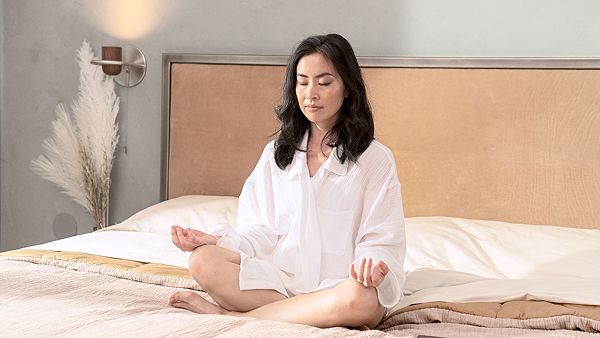
This is precisely why calming practices can be especially valuable after the time change: they help stabilize that temporary imbalance and support more restorative sleep the following night. Contemplative tools, such as meditation, mindful movement, and breathwork, help discharge tension while supporting parasympathetic balance by encouraging the body toward a more settled, sleep-supportive state. Together, and on their own, these practices can help reset the system and prepare the body for deeper sleep.
Here are 5 ways to minimize the adverse effects of the time change:
1. Gradually shift your sleep schedule.
In the days leading up to the time change, move bedtime and wake time earlier by ten to fifteen minutes per day. This helps the nervous system adapt more smoothly, reducing the abruptness of the lost hour.
2. Prioritize morning light exposure.
Get outside shortly after waking, opening blinds, or seeking bright natural light. Light is the primary regulator of circadian timing. It signals the brain to realign its internal clock.
3. Use gentle yoga, breathwork and meditation to regulate the nervous system.
Slower practices such as hatha or restorative yoga can be particularly helpful after the shift. Meditation further supports emotional and cognitive regulation, helping counter the scattered or restless feeling that can emerge after circadian shifts.
4. Regulate meal times.
It is not only light that influences circadian rhythm, but also mealtimes. Consider making slight adjustments to your mealtimes in the days ahead of spring-forward. Alternatively, simply creating new consistent meal times will help the body adjust to the new time zone.
5. Add consistent, moderate movement like walking.
A morning or midday walk combines light exposure, circulation, and nervous system regulation. This simple intervention supports circadian alignment while improving mood, clarity, and evening sleep readiness.
Spring Forward is more than a scheduling adjustment; it is a reminder that the body runs on rhythms rather than clock time alone. By approaching the shift with small, supportive behaviors — adjusting sleep gently, prioritizing light exposure, and incorporating calming practices like yoga, breathwork, meditation, or walking — the transition becomes far less disruptive and often surprisingly manageable.
By: Dr. Sara Elizabeth Ivanhoe
